Bhojde Village Resort – Vernacular Eco Architecture at Gir Lion Sanctuary
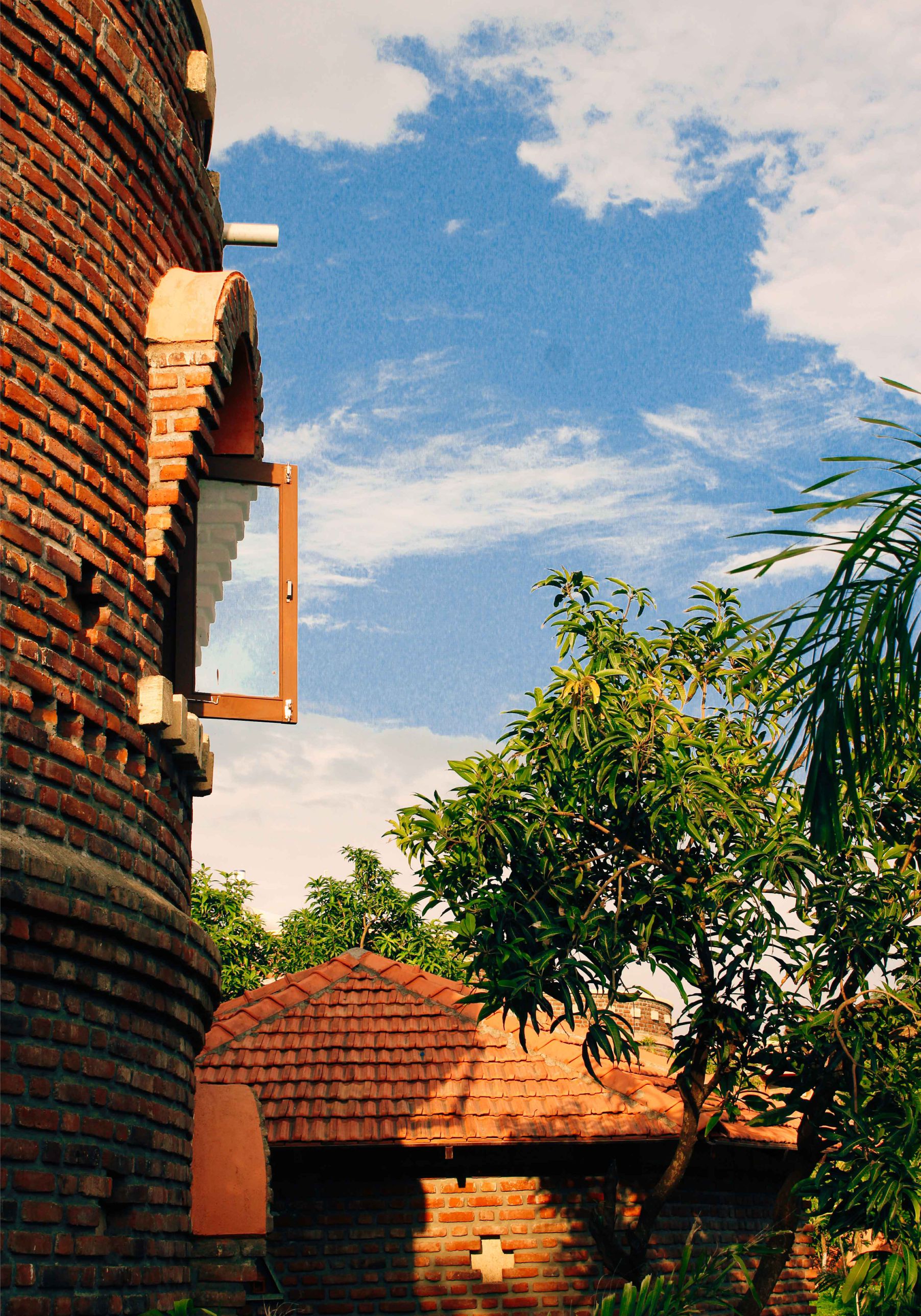

Bhojde Village Resort, Gir Lion Sanctuary – Vernacular Eco Architecture in Gujarat
Location
Bhojde Village, Gir Lion Sanctuary
Ahmedabad, Gujarat, India
Project Overview
Bhojde Village Resort is an ecologically sensitive hospitality project located at the edge of the Gir National Park, the only natural habitat of the Asiatic lion. Designed by d6thd Design Studio, Ahmedabad, the resort is a bold architectural response rooted in vernacular traditions, climate intelligence, and deep respect for the existing landscape.
Spread across a former mango farm, the resort comprises 16 circular cottages, thoughtfully positioned among existing mango trees without disturbing the natural ecosystem. The architecture blends seamlessly with the forest environment, creating an immersive experience where nature and built form coexist harmoniously.
Vernacular Design Inspired by Nature
The circular cottages draw inspiration from local nomadic dwellings and the primal symbolism of the lion — strength, protection, and rootedness. The form creates a sense of psychological security while allowing guests to remain closely connected to the surrounding forest.
Once inside, the circular layout envelops occupants in a cozy, womb-like space, offering comfort, shelter, and a powerful emotional connection to nature. The architecture becomes a physical interpretation of human home-making instincts — organic, instinctive, and deeply contextual.
Sustainable Construction & Local Materials
Sustainability at Bhojde Village is achieved through honest material use and traditional construction techniques:
- Exposed brickwork using locally sourced thin bricks
- Random rubble stone foundations
- Load-bearing exposed brick walls
- Sandstone jalis and arches
- Clay tile roofing
All materials were sourced within a 50 km radius, significantly reducing transportation impact. Local labour was employed throughout the construction process, strengthening community engagement and reducing embodied energy.
Minimal Footprint, Maximum Efficiency
The resort is organized into four clusters, each containing four cottages. Two cottages are placed on the ground level and two above, minimizing land footprint and achieving economic efficiency.
- Circular construction offers additional advantages:
- Reduced wall and foundation requirements
- Improved thermal performance in hot and dry climates
- Structural stability during earthquakes and cyclonic winds
- Small window openings and thick masonry walls further enhance climate responsiveness by reducing heat gain.
Landscape Integration & Spatial Experience
No trees were cut during construction. Instead, cottages were designed to grow around existing mango trees, making them an integral part of the architectural language. Courtyards with mango trees act as transitional spaces between private bedrooms and semi-open communal areas.
Each cluster features:
- A shaded foyer beneath mango trees
- Informal semi-covered living spaces
- Stone-built seating integrated into the landscape
- Open helical staircases made of rough Kola stone leading to upper cottages
- The spatial sequence transitions naturally from light to dark, open to enclosed, public to private, creating rich experiential moments throughout the resort.
Eco-Conscious Planning & Resource Efficiency
Built on rocky terrain, the site required minimal foundation work. Rainwater runoff is harvested and used to irrigate the adjoining farm, where organic vegetables are grown for guests. Local neem wood was used for doors and window frames, further reinforcing the project’s commitment to sustainability.
The resort preserves and propagates native plant species, maintaining the ecological balance of the forest environment.
An Immersive Forest Living Experience
Bhojde Village offers more than accommodation — it offers a sensory experience of wilderness. Guests walk along stone pathways through dense foliage, catch glimpses of cottages hidden like lions in the undergrowth, and spend evenings beneath the stars on traditional wooden charpais.
The sounds of rustling mango leaves, forest winds, and distant lion calls create a humbling connection to nature, fostering awareness, vulnerability, and harmony with the earth.
Architectural Philosophy
At Bhojde Village, architecture does not dominate the landscape — it submits to time, weather, and nature. Sun, rain, moss, and wind are allowed to mark the surfaces, slowly transforming the built form into a living extension of the forest.
This project stands as a powerful example of vernacular architecture, sustainable resort design, and climate-responsive planning in India.
Key Project Highlights
- Location: Gir Lion Sanctuary, Gujarat
- Typology: Eco-Resort / Hospitality
- Architect: d6thd Design Studio, Ahmedabad
- Cottages: 16 circular units
- Materials: Exposed brick, stone, sandstone, clay tiles
- Approach: Vernacular, sustainable, low-impact architecture
.jpg)
.jpg)

-preview.webp)

-preview.webp)