



Navin’s MD Navin Kumar Highlights Financial Benefits and Challenges of Green Buildings
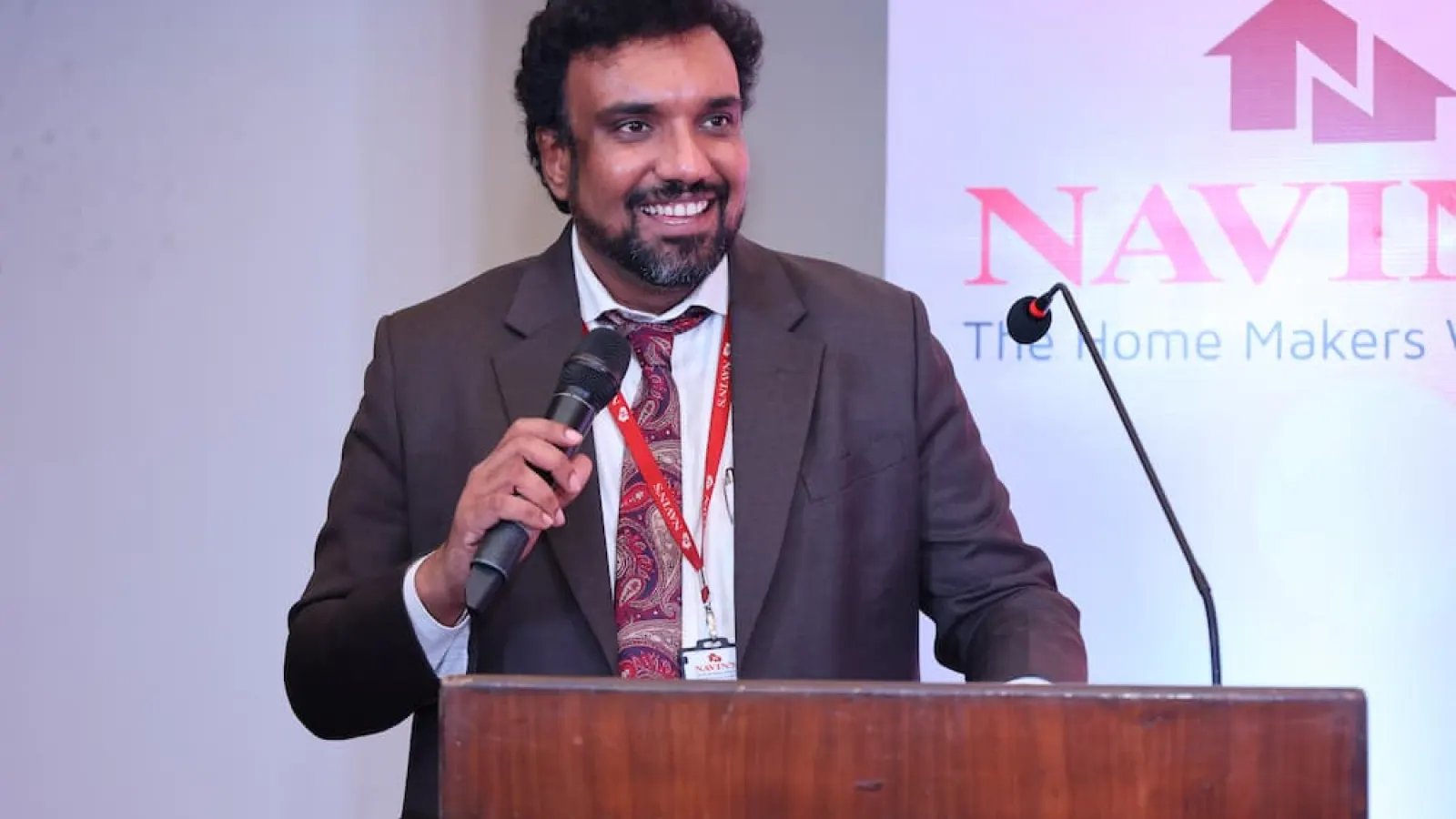
Chennai, September 26, 2026: Sustainable buildings are increasingly being evaluated not only for their environmental benefits but also for their long-term financial returns, according to Navin Kumar, Managing Director of Navin’s.
Speaking at the CII IGBC Green Tamil Nadu Summit 2026, Kumar discussed the business case for green buildings, focusing on upfront costs, long-term operational savings, financing benefits and the challenges developers face as projects scale towards higher sustainability standards.
Green Buildings May Require 3–4% Additional Investment
Kumar noted that estimates for the additional capital expenditure associated with green buildings can vary significantly.
While some estimates place the incremental cost at approximately 0.5%, Kumar said his assessment is closer to 3–4%.
For projects targeting higher sustainability ratings, including Platinum certification, the additional cost could rise to as much as 10%.
However, he said these initial expenses need to be evaluated alongside the medium- and long-term financial benefits generated by sustainable buildings.
Energy and Water Savings Can Offset Higher Costs
According to Kumar, the difference between maintaining a conventional building and a green building can result in a net surplus over time, primarily due to lower energy and water consumption.
Energy-efficient systems, water conservation measures and improved building performance can reduce operating expenses throughout the lifecycle of a development.
These savings can help offset some of the additional capital expenditure required during the planning and construction stages.
Green Buildings Can Benefit from Lower Borrowing Costs
Kumar also highlighted the financing advantages available for sustainable developments.
He said financial institutions can offer credit at slightly lower rates for green buildings compared with conventional developments.
According to Kumar, preferential borrowing rates can range from approximately 0.1% to 0.4% below standard borrowing costs, while certain financing schemes may provide greater benefits.
Such incentives can strengthen the financial case for developers considering investment in sustainable construction.
Higher Sustainability Standards Bring Scaling Challenges
Kumar also addressed challenges that emerge as developments become larger and target higher environmental performance levels.
Projects pursuing Platinum certification and net-zero standards may require additional infrastructure and space for sustainability measures.
As development density increases, the availability of space for systems such as rainwater harvesting and solar installations can become constrained.
Developers therefore need to incorporate these requirements into the planning and design stages when targeting higher levels of environmental performance.
Net Zero Water and Zero Waste the Next Step
Looking beyond basic green building certification, Kumar highlighted the importance of moving towards advanced sustainability standards.
“Moving from basic green certification to Net Zero Water and Zero Waste is where true sustainability begins.”
The transition towards Net Zero Water and Zero Waste requires a broader approach to resource consumption, water management, waste reduction and long-term building performance.
Financial and Environmental Case for Green Buildings
The discussion at the CII IGBC Green Tamil Nadu Summit highlighted how the business case for sustainable buildings is increasingly connected to both environmental performance and financial viability.
Although green buildings may involve higher initial capital expenditure, operational savings from reduced energy and water consumption, along with preferential financing opportunities, can contribute to their long-term economics.
At the same time, developers targeting higher certifications need to address constraints related to project density, space availability and sustainability infrastructure from the early stages of development.
About Navin’s
Under the leadership of Dr. R. Kumar, Founder and Chairman, Navin’s has operated in Chennai’s real estate sector for more than 37 years.
The company has developed 130+ projects and says its quality-control framework incorporates more than 1,575 quality checks.
Navin’s was the first developer in Chennai to receive ISO 9001:2008 certification, subsequently upgrading its certification to ISO 9001:2015.
The company reports serving more than 4,000 families and receiving over 60 awards across real estate, construction, affordable housing and sustainability categories.
Its recognitions include awards from the Construction Industry Development Council (CIDC) and the Builders Association of India, PMAY recognition for affordable housing in 2019 and 2022, IGBC National Green Champion, and Most Reputed Developer of the Year 2019 from ET Now.
Navin’s Starwood Towers has also received more than 20 accolades, including recognitions associated with PMAY, CIDC and ET Real Estate Awards.
The company has received the CIDC Vishwakarma Awards three times and has also been recognised as Best Professionally Managed Company.
Key Highlights
- Speaker: Navin Kumar, Managing Director, Navin’s
- Event: CII IGBC Green Tamil Nadu Summit 2026
- Location: Chennai
- Estimated Additional Green Building Cost: 3–4%, according to Kumar
- Some Industry Estimates: Approximately 0.5%
- Platinum Certification: Additional cost could reach up to 10%
- Green Financing Benefit: Approximately 0.1%–0.4% lower borrowing rates cited
- Key Long-Term Savings: Energy and water consumption
- Scaling Challenges: Space for rainwater harvesting, solar installations and sustainability systems
- Future Focus: Net Zero Water and Zero Waste
- Navin’s Experience: 37+ years
- Projects: 130+
- Families Served: 4,000+
- Quality Checks: 1,575+
- Awards: 60+
Click to view PDF
.jpg)
.png)



-preview.webp)