Hanging House (Ladhani House), Noida | Contemporary Cantilevered Residence by Studio Archohm
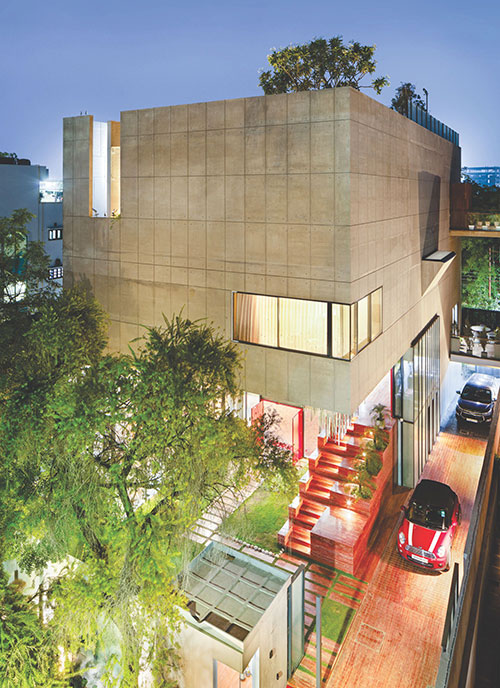
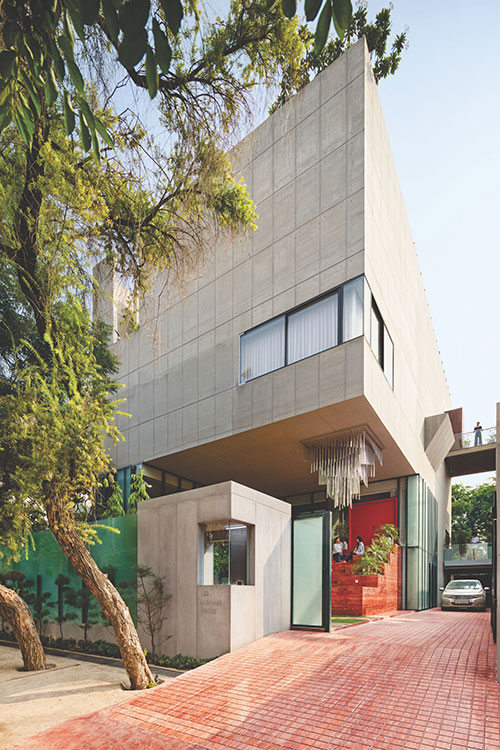



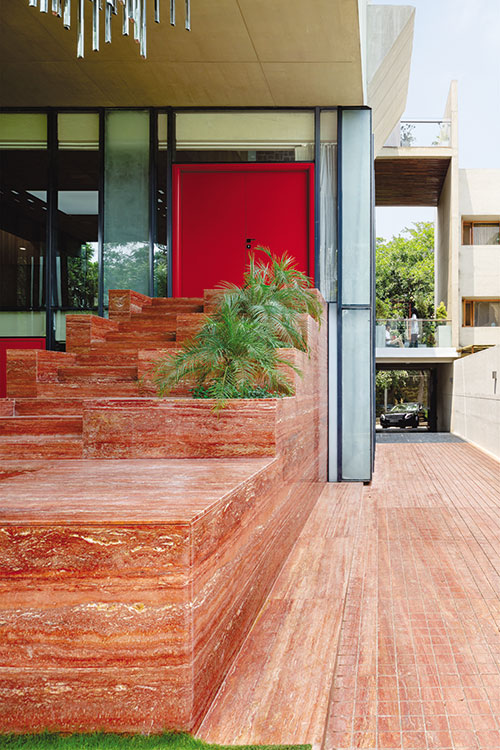
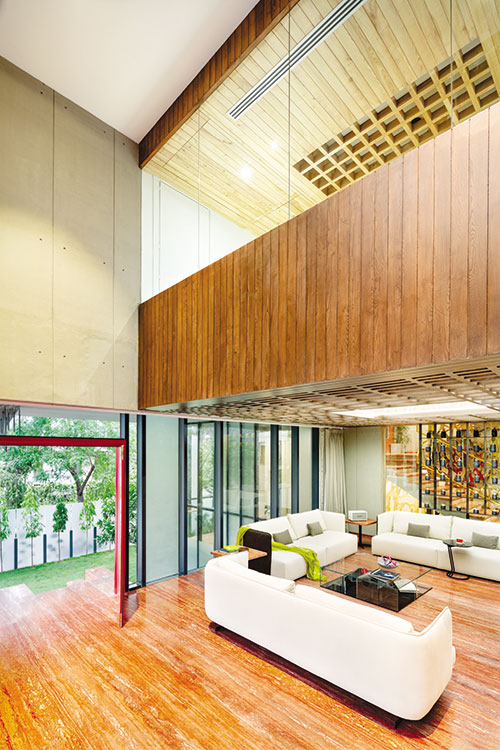
The Hanging House, also known as the Ladhani House, is a striking contemporary residence located in a dense plotted neighborhood of Noida, India. Designed by Studio Archohm, the house responds intelligently to the chaotic urban fabric where most homes maximize floor plates and compete visually through materials and form. Instead of participating in this visual noise, the Hanging House adopts a quiet yet powerful architectural language—clean, balanced, and structurally expressive.
The client envisioned a home that was more than just a façade-driven statement. They desired a residence that expressed identity through form, spatial planning, and lived experience, while balancing extroverted social spaces with introverted private zones. The design addresses Delhi’s extreme climate—harsh summers, cold winters, and intense monsoons—through shaded gardens, sunlit interiors, courtyards, and covered spillover spaces.
At its core, the house is conceived as a sunlit home throughout the day, fulfilling one of the client’s most fundamental requirements. The architects designed optimized floor plates that maximize spatial efficiency while achieving generous double-height volumes. A defining feature of the house is its concrete cantilever system, which reduces the perceived built mass and creates dramatic open terraces and shaded outdoor areas—earning the project its name, Hanging House.
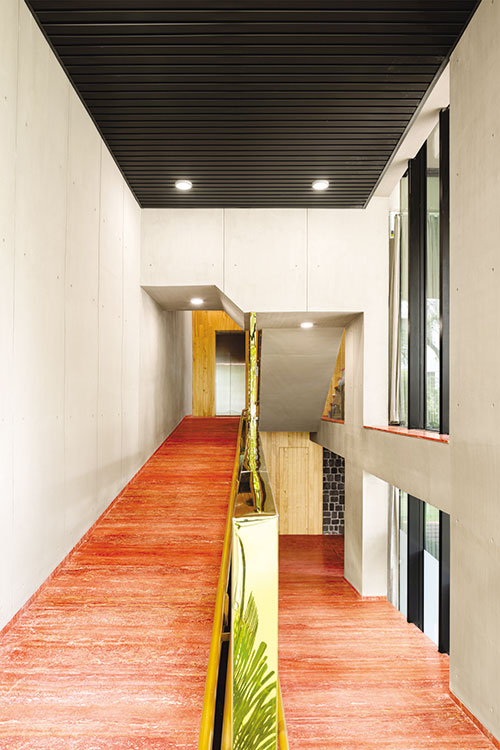
The exterior façade stands out in solidarity and endurance amid its surroundings, featuring sculpted openings, skylights, and framed views that strengthen the connection between the interior and nature. Natural materials such as Red Travertine and Black Kadappa Stone form the backbone of the material palette, creating a timeless yet contemporary character.
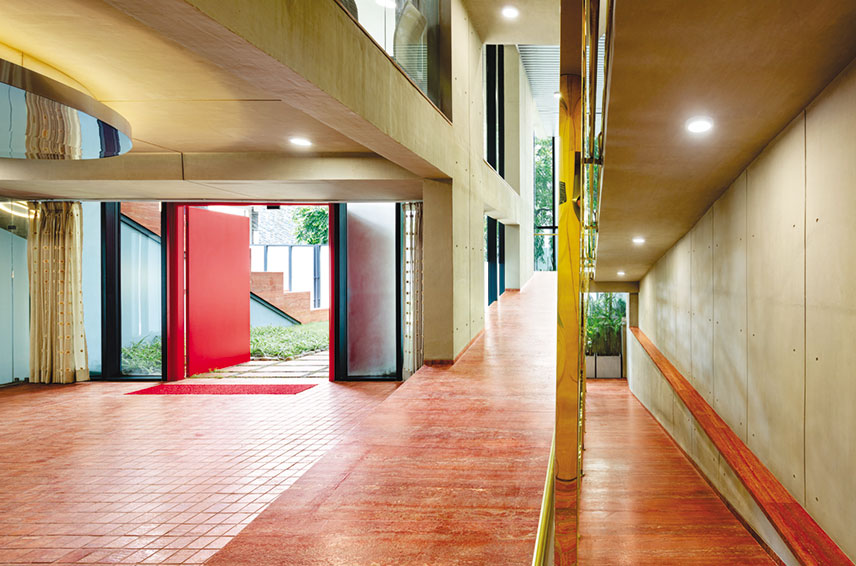
Visitors enter through a landscaped garden into a stilt-level lobby that unfolds into a double-height entrance space. Artworks by Mukul Goyal and Vishakha enrich the spatial narrative, blending art with architecture. A ramp leads to the basement level—one of the home’s most unique features—housing a naturally lit recreational zone with a semi-elliptical swimming pool. A full-height mirror visually completes the pool into a perfect oval, creating an illusion of expansive space. The basement also includes a home office with a fireplace overlooking greenery and a dedicated kids’ activity room.
The first floor functions as the private family apartment, offering warmth and comfort through vinyl flooring, Pandomo finishes, and wooden wall cladding. This level acts as a transitional zone between the more public spaces below and the secluded areas above.
A double-height temple space, inspired by traditional Indian temple forms, is reimagined with a contemporary aperture that brings in filtered daylight from above. The second floor accommodates guest bedrooms, designed with minimalist aesthetics and opening out to a lush terrace garden and outhouse. An immersive wall projection system transforms the space into an experiential environment for family interaction and relaxation.
The Hanging House is the result of deeply engaging conversations between the architects and the client, translating lifestyle aspirations into architecture. It is a residence that balances privacy and openness, urban living and nature, solidity and lightness. Through its carefully framed views, exposed concrete craftsmanship, and natural material palette, the Ladhani House emerges as a serene yet powerful urban home—infusing liveliness, elegance, and a distinct architectural identity into the cityscape.



-preview.webp)

-preview.webp)