A Courtyard Haven: The Bellad Residence in Hubli, Karnataka
A Courtyard Haven: The Bellad Residence in Hubli, Karnataka
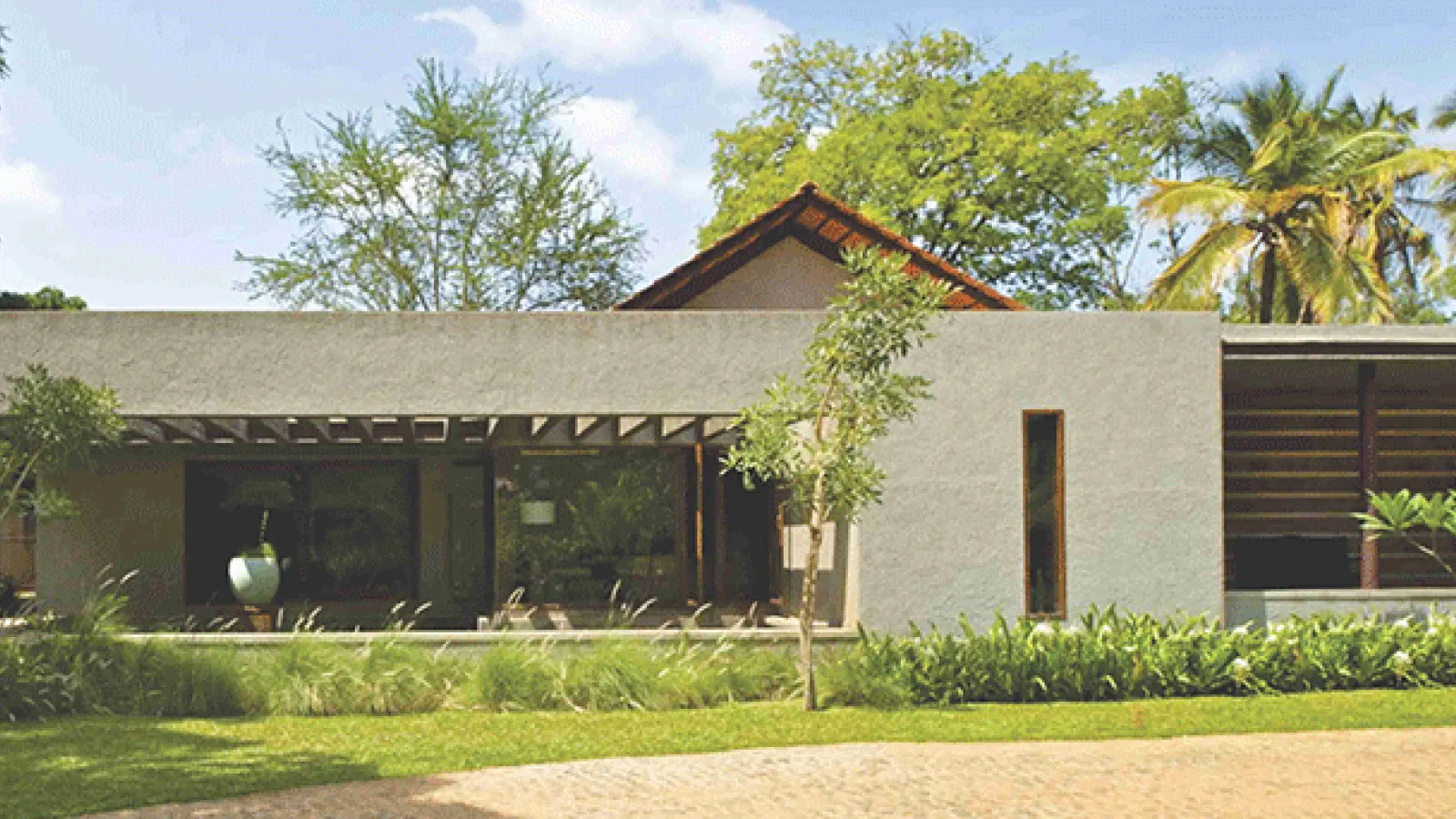
Set on a one-acre wooded site in Hubli, Karnataka, the Bellad Residence beautifully blends Vastu principles, vernacular architecture, and modern environmental design. The house is designed around a vast 3,000 sq. ft. open courtyard and features sloping tiled roofs, wide verandahs, natural stone, and terracotta, ensuring excellent ventilation, insulation, and harmony with the surrounding tropical landscape.
The residence was designed for Hubli businessman Arvind Bellad and his family. The site was filled with towering old Gulmohar trees, with peacocks often seen wandering around. The design intent was to create a house that would weave itself naturally into this peaceful wooded environment.
The family wanted a home with minimal programmatic requirements but with large open spaces and the privacy of a central courtyard. Another important requirement was to follow the principles of Vastu, the ancient Indian science of spatial harmony and energy flow.
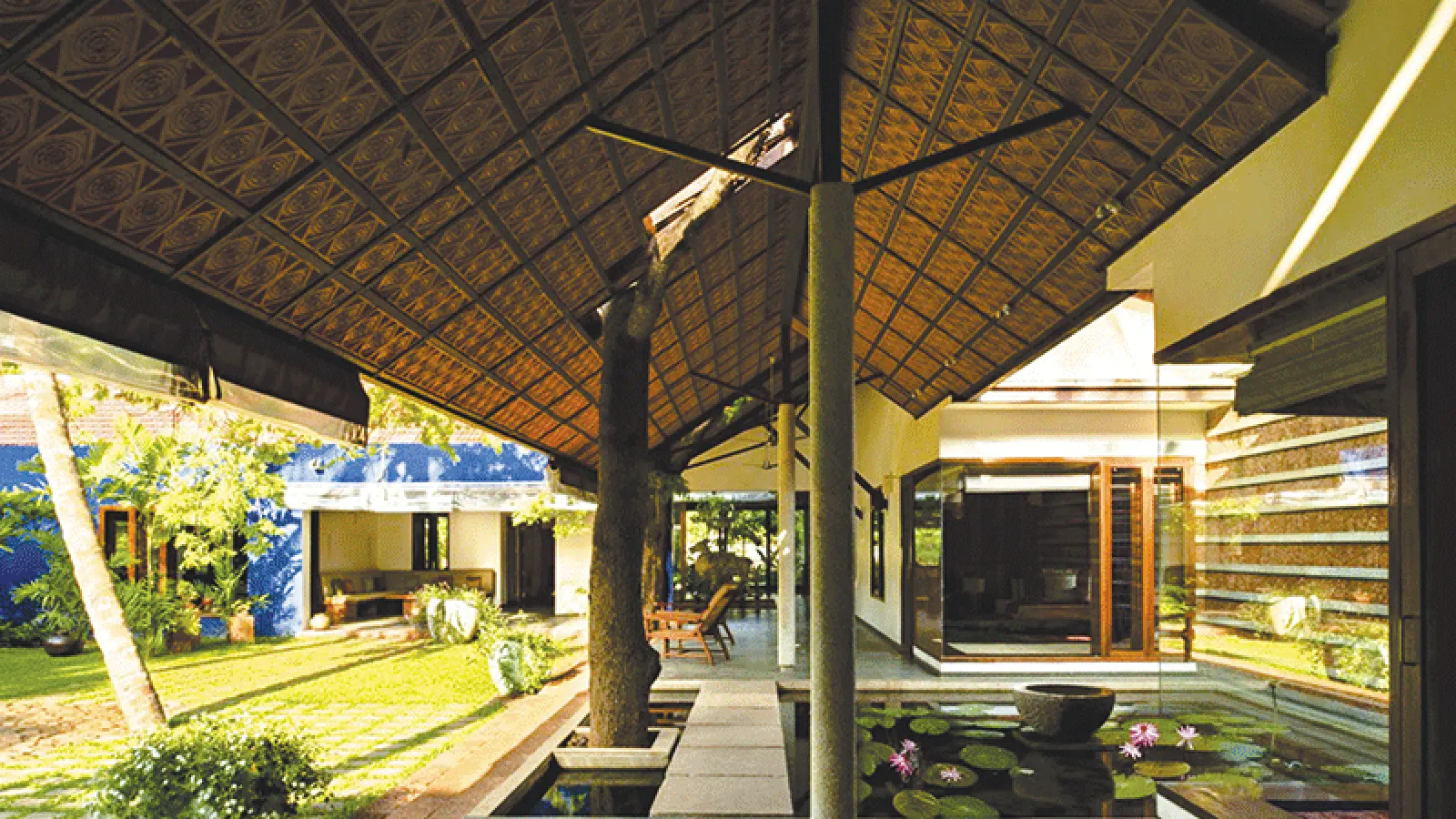
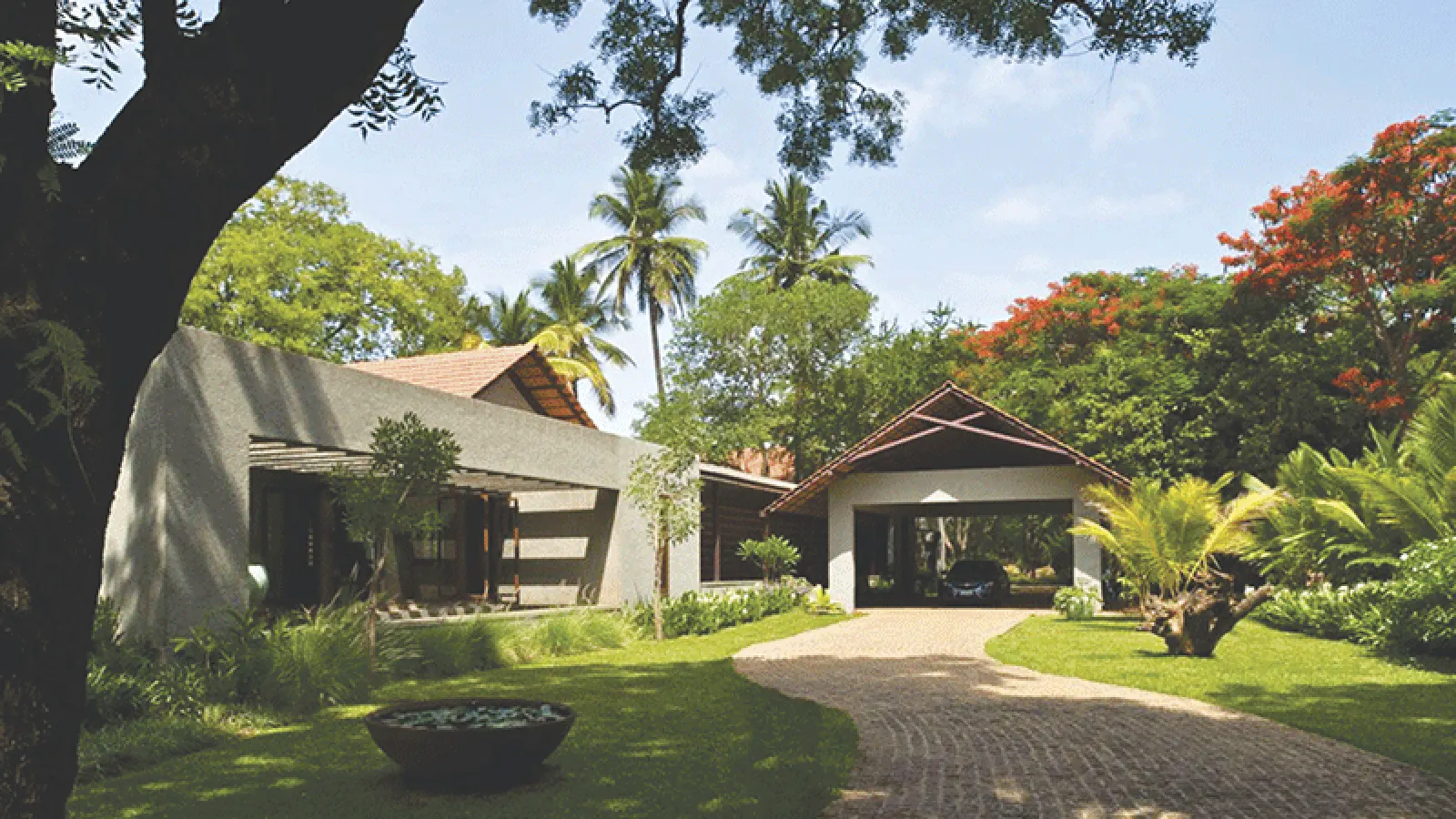
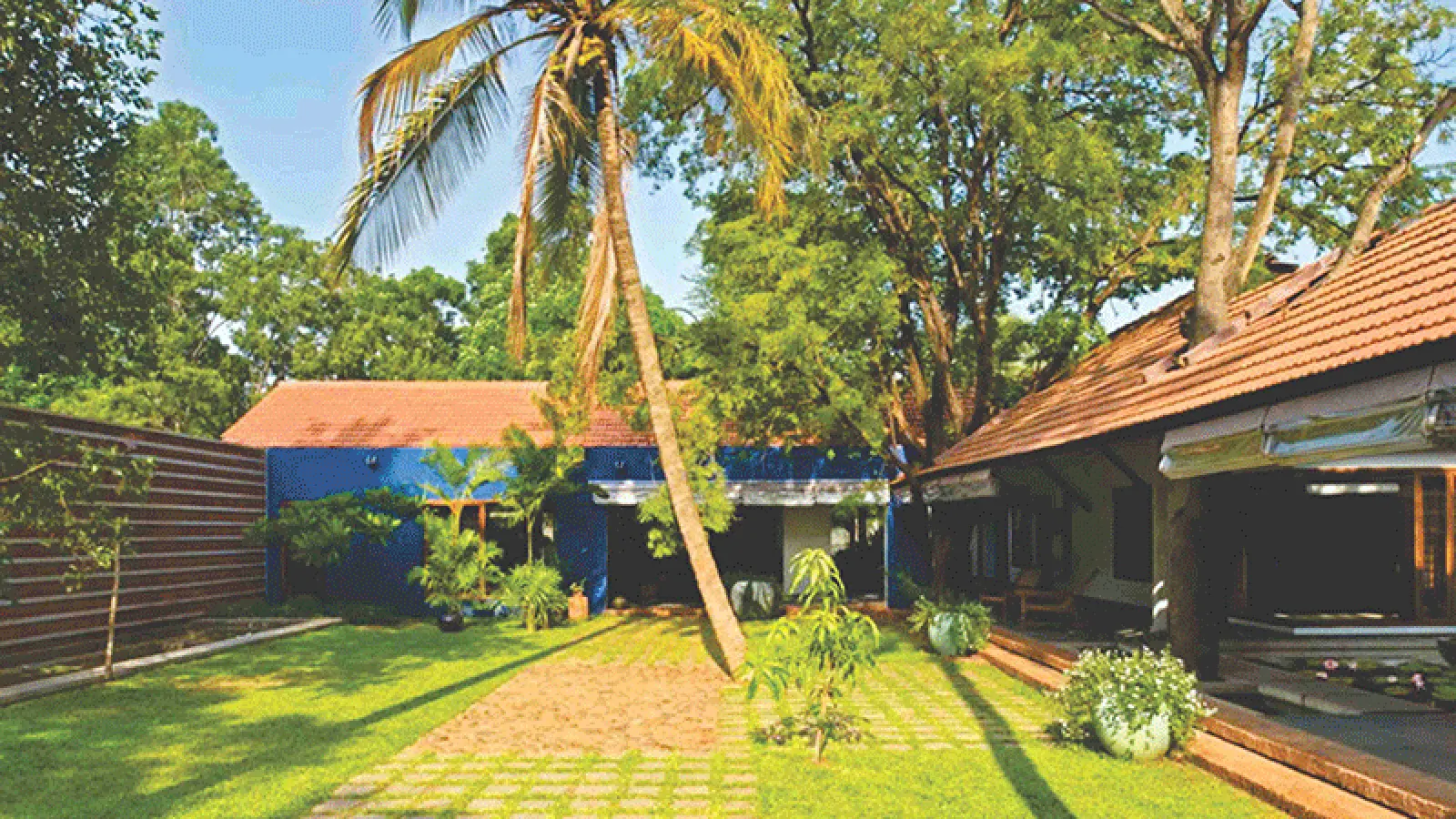
Considering the large site, a single-level home was planned. Vernacular sloping tiled roofs were used to create a low structure that blends with nature. The design revolves around a large 3,000 sq. ft. open-to-sky courtyard, creating a strong connection between built spaces and open areas.
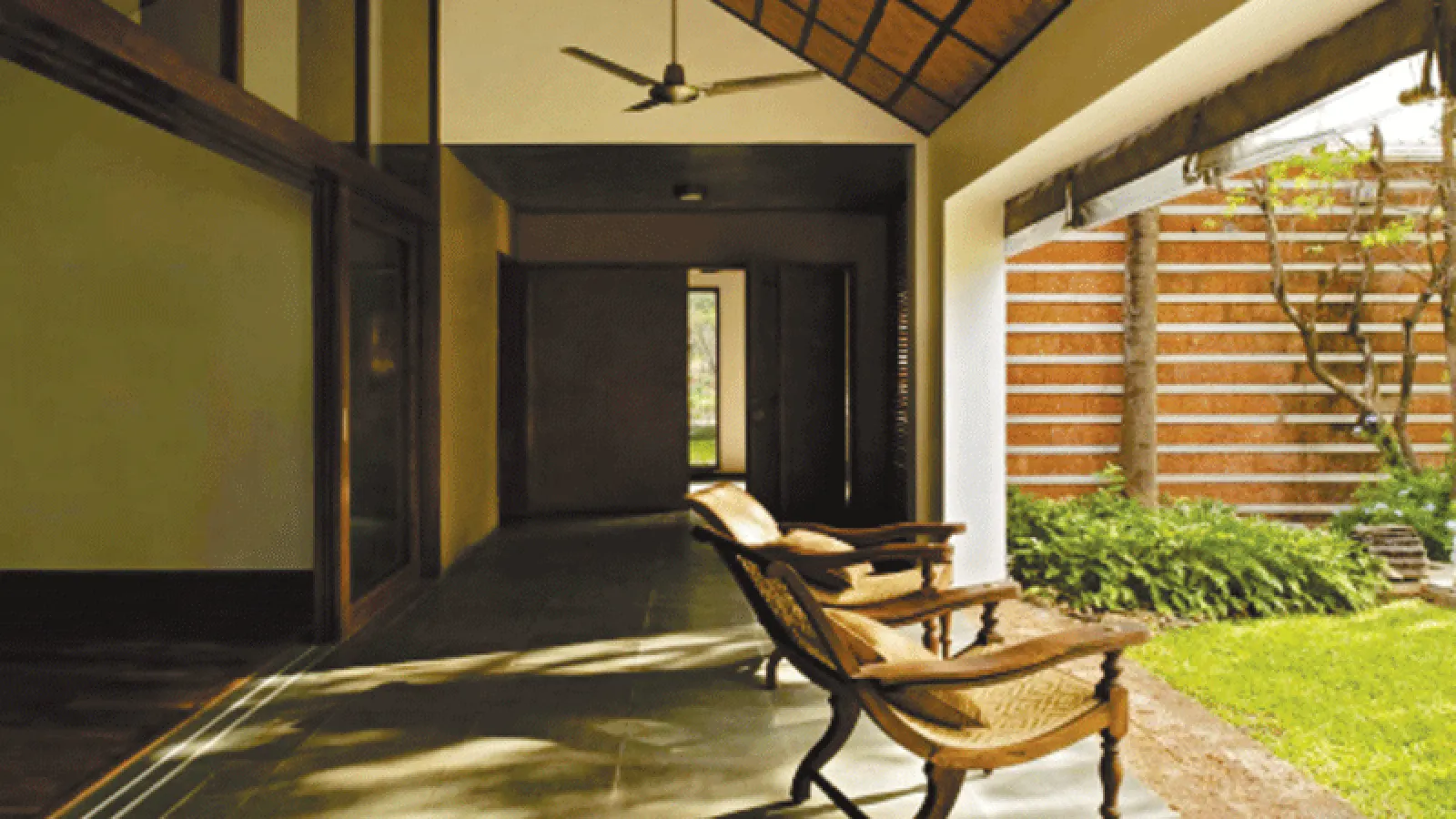
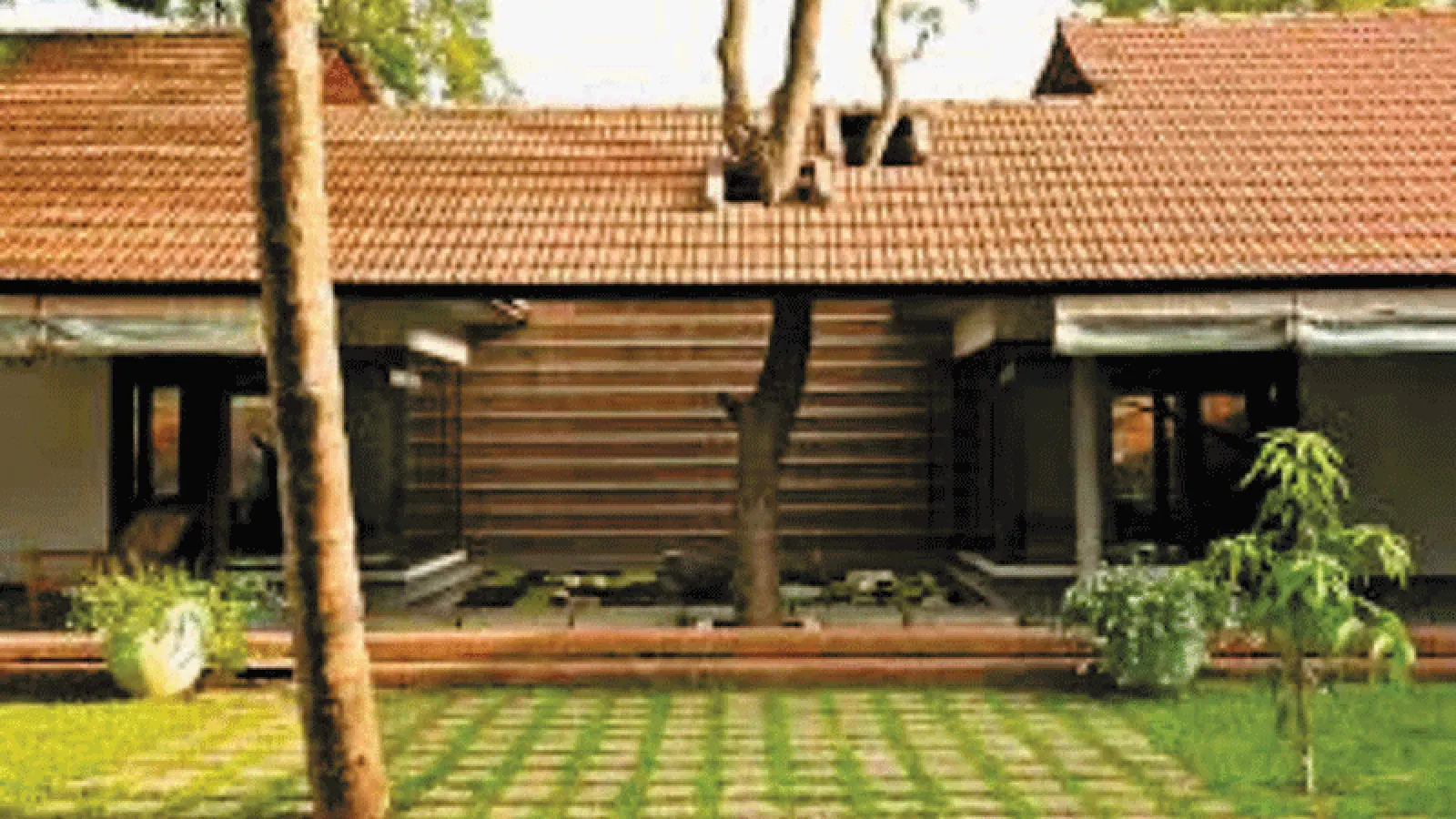
Rooms are arranged around the courtyard with a wide tiled verandah running along three sides. The 12-foot-deep verandah works as a buffer between indoor and outdoor spaces, creating comfortable areas for reading, dining, and relaxation. It connects the public and private zones smoothly.
The entrance driveway begins at the northeast corner and leads to a tiled roof portico. A red laterite wall combined with local Sadharhalli stone creates a strong visual identity. Hidden behind this wall lies the large courtyard filled with greenery, flowering plants, and water lily ponds, offering relief from the hot and dusty climate.
The house includes five bedrooms, a family room, formal living and dining spaces, designed for a family of four. A special requirement was to create separate public and private access for meetings, as the family frequently hosts guests for political and social discussions. Two separate entrances were created on the north side, one private and one public.
To improve thermal comfort, the design team worked with TERI (The Energy and Resources Institute) to enhance insulation and ventilation. Thick walls on the south and west sides reduce heat, while roof vents allow hot air to escape. Double tiled sloping roofs help reduce indoor temperature by 4–5 degrees.
Dormer windows face north to allow soft daylight, and insulated roof slabs with polystyrene layers improve cooling efficiency. Rainwater from the sloping roofs is directed into harvesting pits.
The material palette includes local natural stone, wood, terracotta, and laterite, with occasional blue walls inside the courtyard adding color contrast.
Landscape design played a crucial role in the 11,000 sq. ft. residence. Tropical landscaping was designed by Balinese landscape designer Dewa Kusuma, creating a seamless connection between architecture and nature.
A dining pavilion opens to both the garden and a small private courtyard, blurring the boundary between indoor and outdoor spaces.
Bedrooms are located in the south and west wings, each opening to landscaped courts. Between the children's rooms lies a water lily pond with stepping stones, creating a peaceful view from the bay windows.
The Bellad Residence stands as an example of climate-responsive architecture that respects tradition, nature, and modern comfort.
.jpg)
.jpg)



-preview.webp)