Chicken Hero Pavilion – A Circular Economy Prototype in Bali by RAD+ar
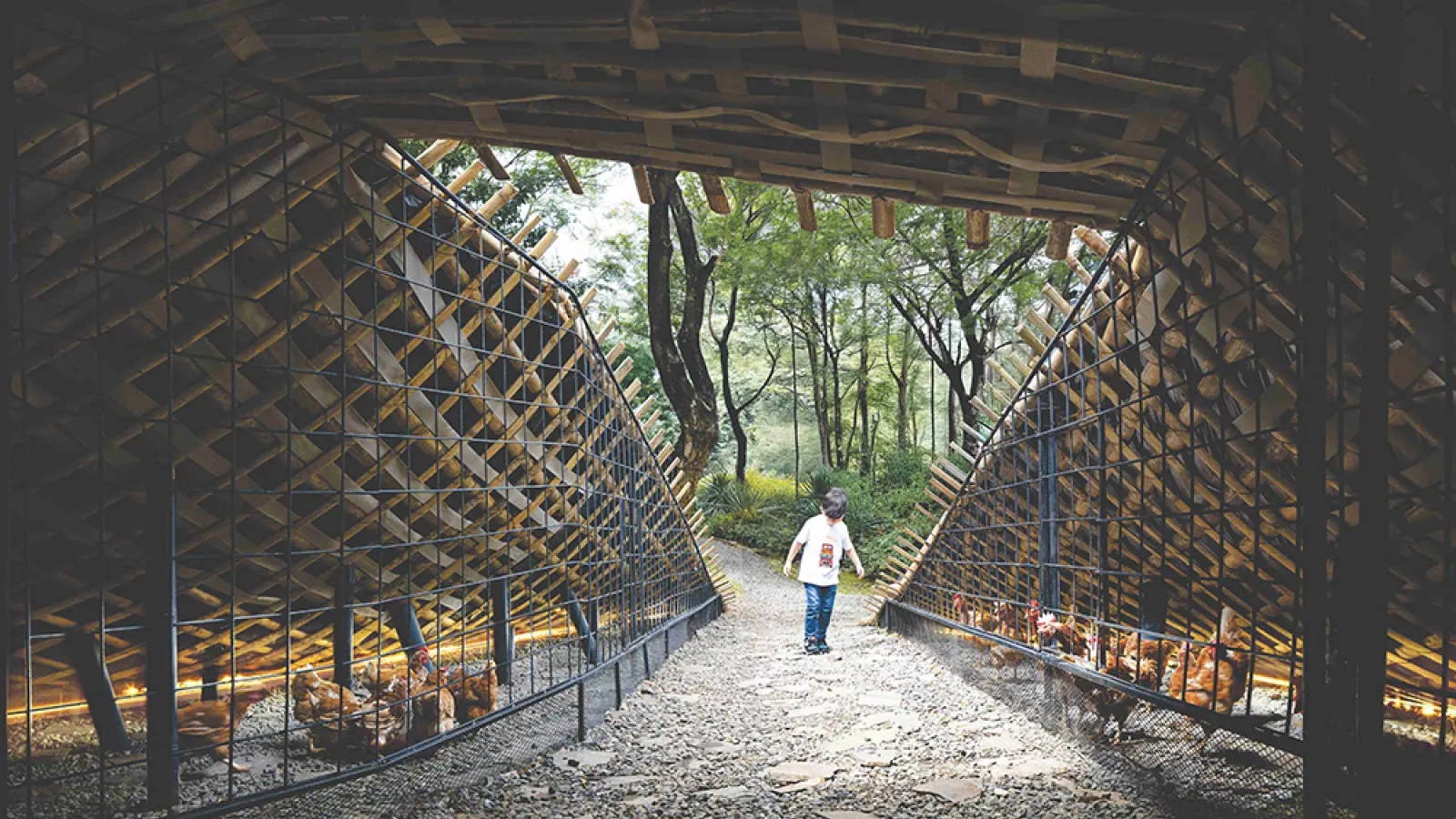
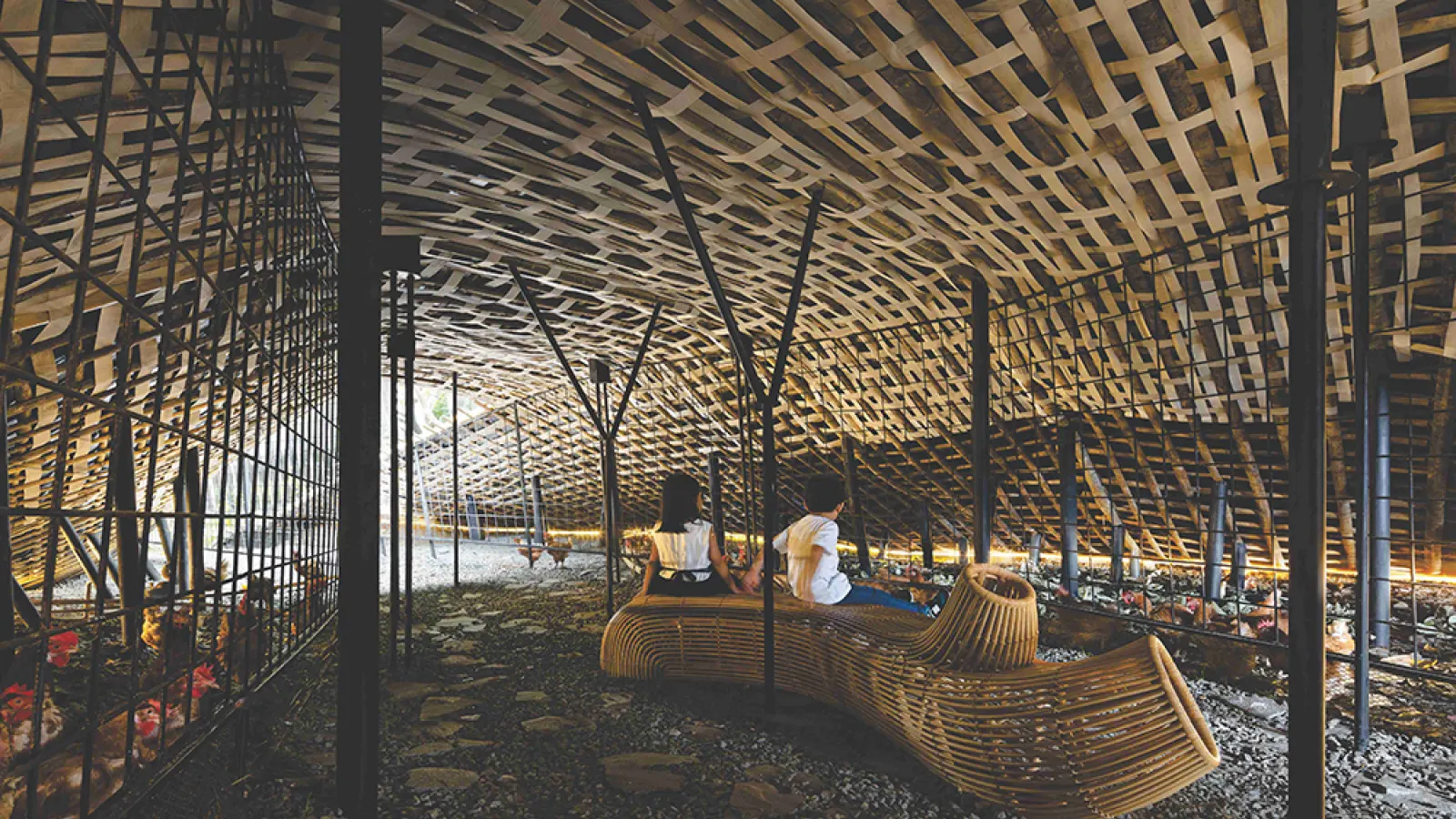
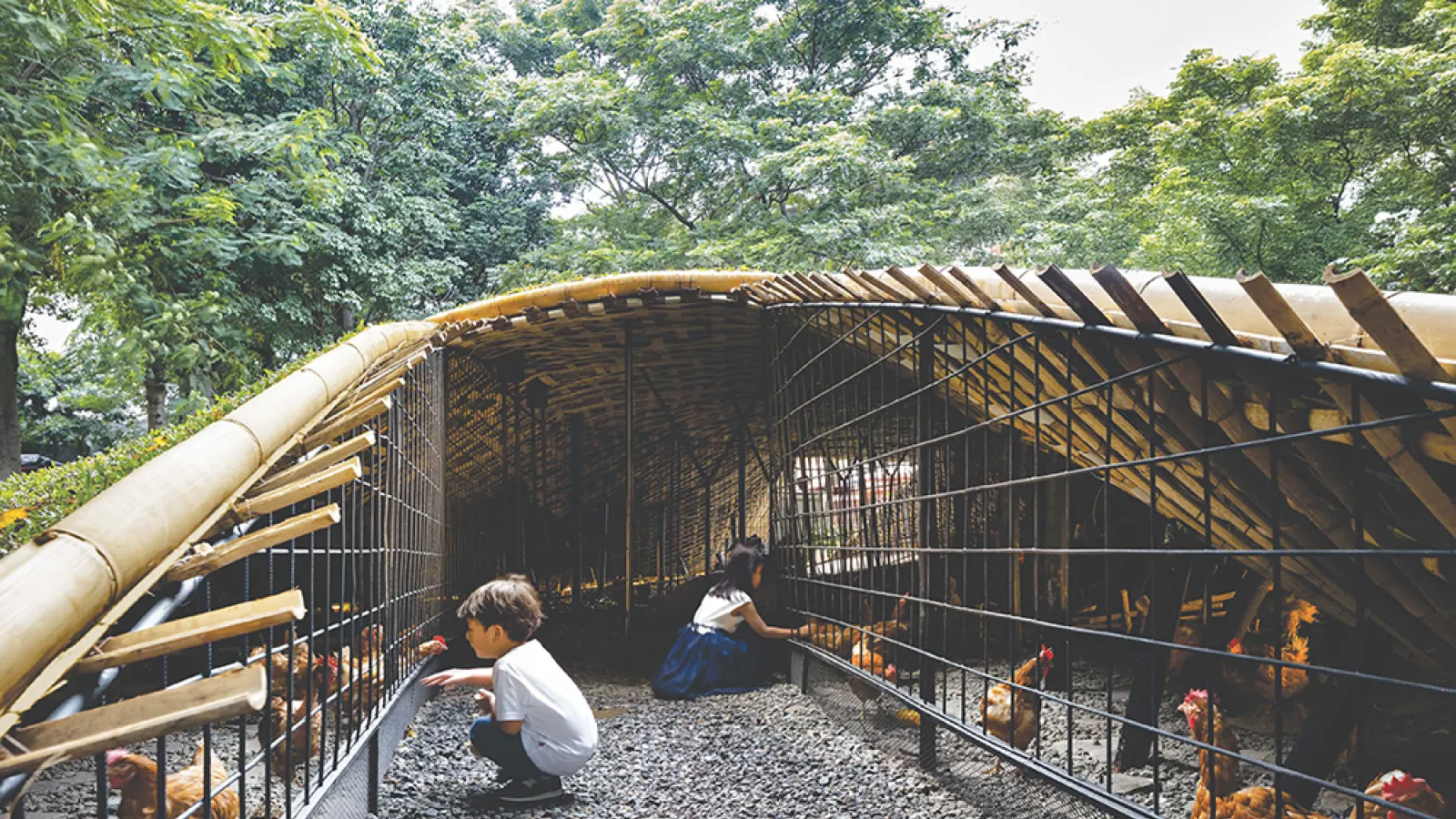
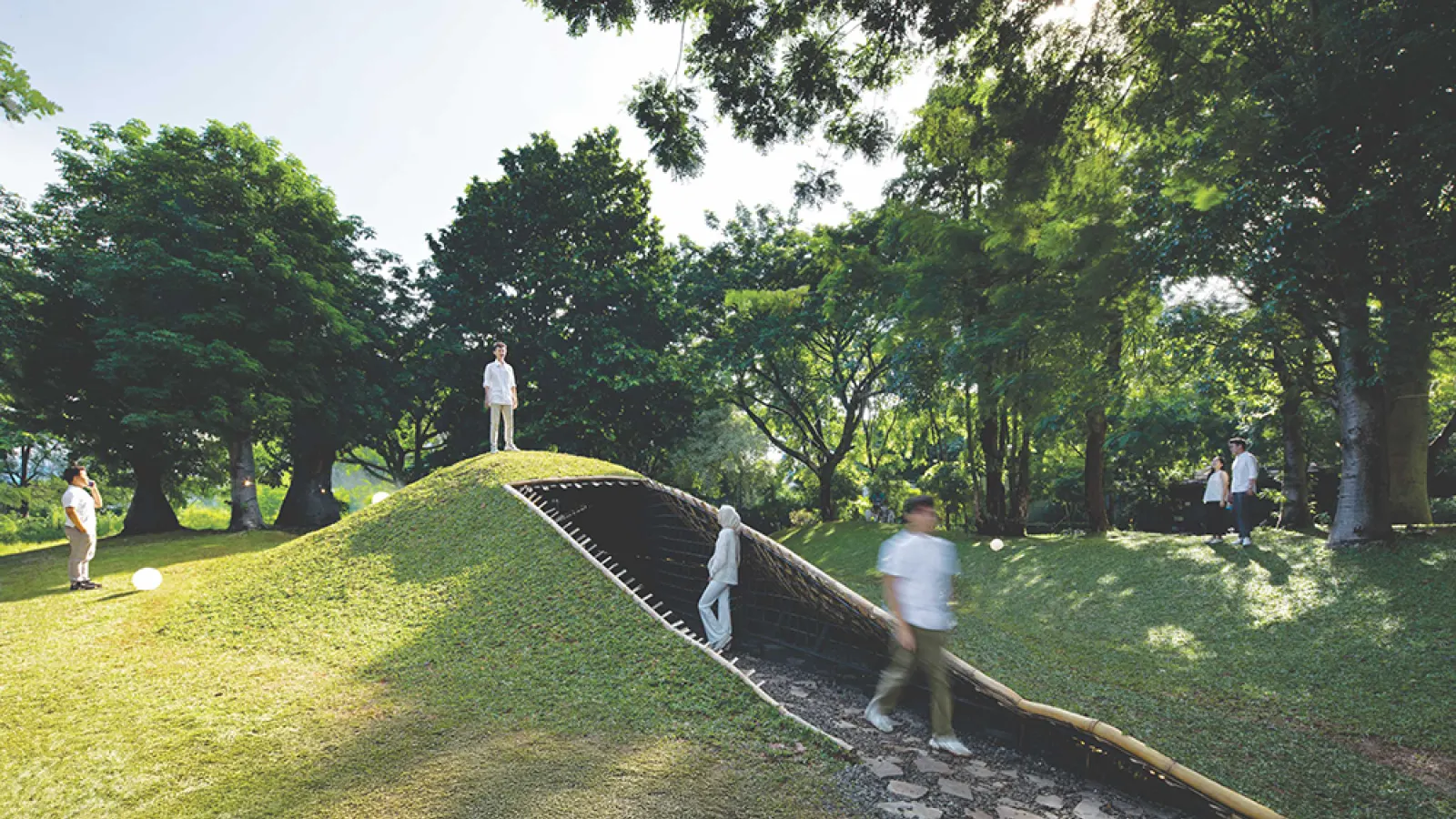
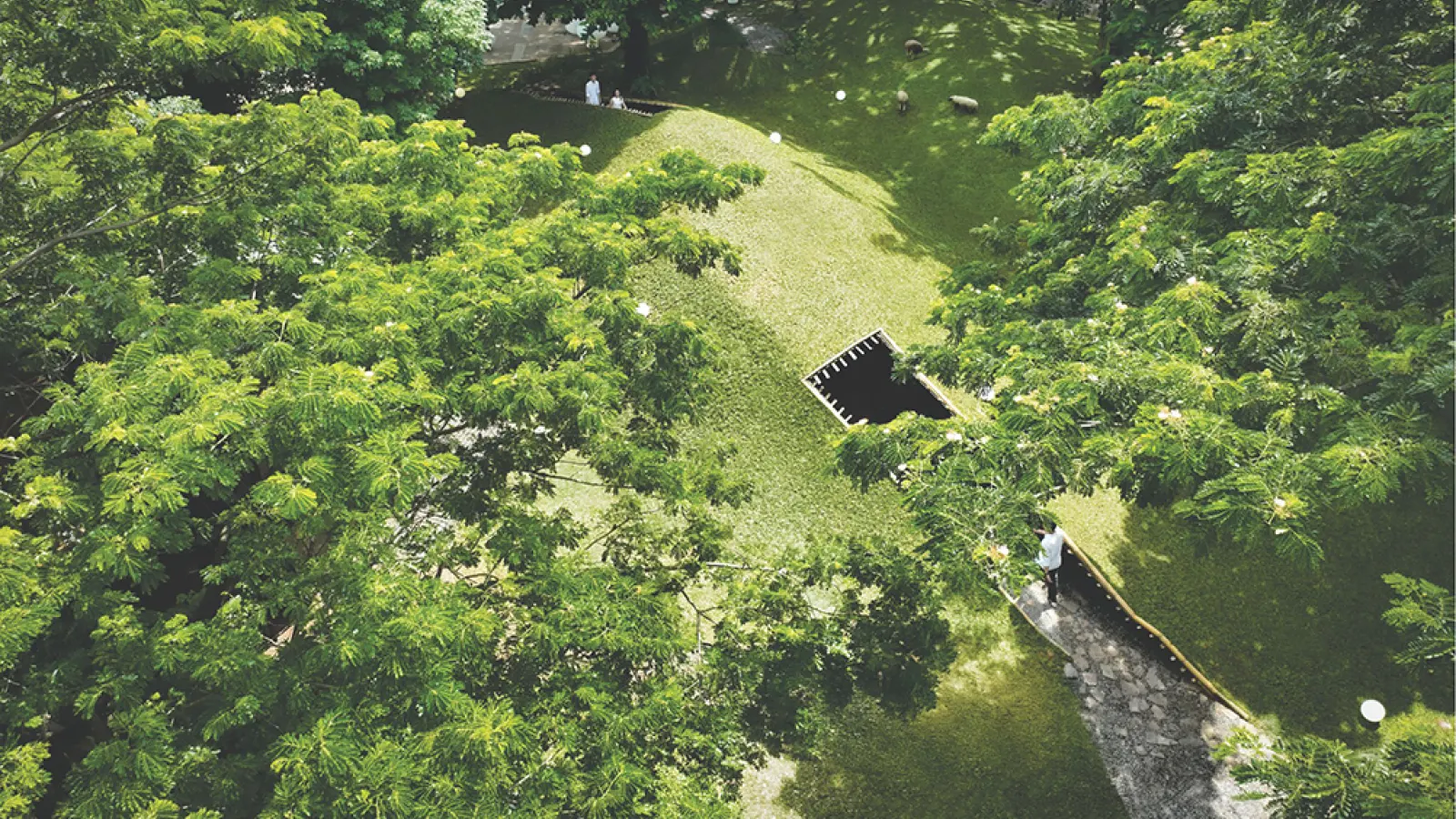
The Chicken Hero Pavilion, designed by RAD+ar, is an innovative prototype that reimagines circular economy principles within urban landscapes. Located in the lush setting of Urban Forest Jakarta, the pavilion blends seamlessly into its surroundings, appearing like a natural extension of the hilly terrain.
At its core, the project promotes backyard poultry farming as a decentralized solution to food waste management. Through an eco-friendly, upcycled chicken coop prototype, the pavilion demonstrates how organic waste can be transformed into valuable resources such as compost and eggs. This initiative addresses Indonesia’s pressing food waste challenge, where the country ranks among the highest globally, generating approximately 1.6 million tonnes of food waste annually.
Architecturally, the pavilion features a cave-like tunnel known as the Chickencoop, designed as an inclusive educational and experiential space. Visitors can engage with the system, learning about sustainability, waste cycles, and urban farming in an interactive environment. The structure is built using reclaimed bamboo, forming a horizontal-diagonal green roof that enhances both environmental performance and visual integration with the landscape.
The design prioritizes sustainability and efficiency. The cross-ventilated interiors are illuminated with indirect natural light, ensuring thermal comfort for the chickens while minimizing energy use. Rainwater catchment surfaces and green roofing elements contribute to ecological balance, while the compact layout optimizes space usage without compromising functionality.
During its four-week installation, the pavilion functioned as an active circular system. It processed food waste from six on-site restaurants, converting organic waste and dried leaves into compost every three days. These materials also served as bedding for the chickens, helping regulate humidity. In return, the pavilion produced approximately 40 eggs daily, which were redistributed to the restaurants and offered to visitors as a tangible symbol of the circular process.
Beyond its technical achievements, the pavilion emphasizes social engagement. By encouraging interaction between visitors and chickens, the project challenges existing stigmas around backyard poultry and inspires communities to adopt sustainable practices at a household level. It positions individuals as active participants in environmental change rather than passive observers.
The Chicken Hero Pavilion also explores broader questions of sustainability in developing nations. It presents a scalable model for decentralizing environmental solutions, reducing reliance on large-scale infrastructure, and promoting localized micro-economies. This aligns with the concept of “glocalization,” where global sustainability goals are adapted to local contexts.
Ultimately, the pavilion stands as a powerful example of how design, ecology, and community engagement can come together to create meaningful impact. It is not just an architectural installation, but a working prototype that demonstrates how small, localized interventions can contribute to a larger vision of sustainable urban living.


-preview.webp)
-preview.webp)
-preview.webp)