



Transforming Recycled Plastic into Climate-Responsive Architecture: Lattice Creative Garden
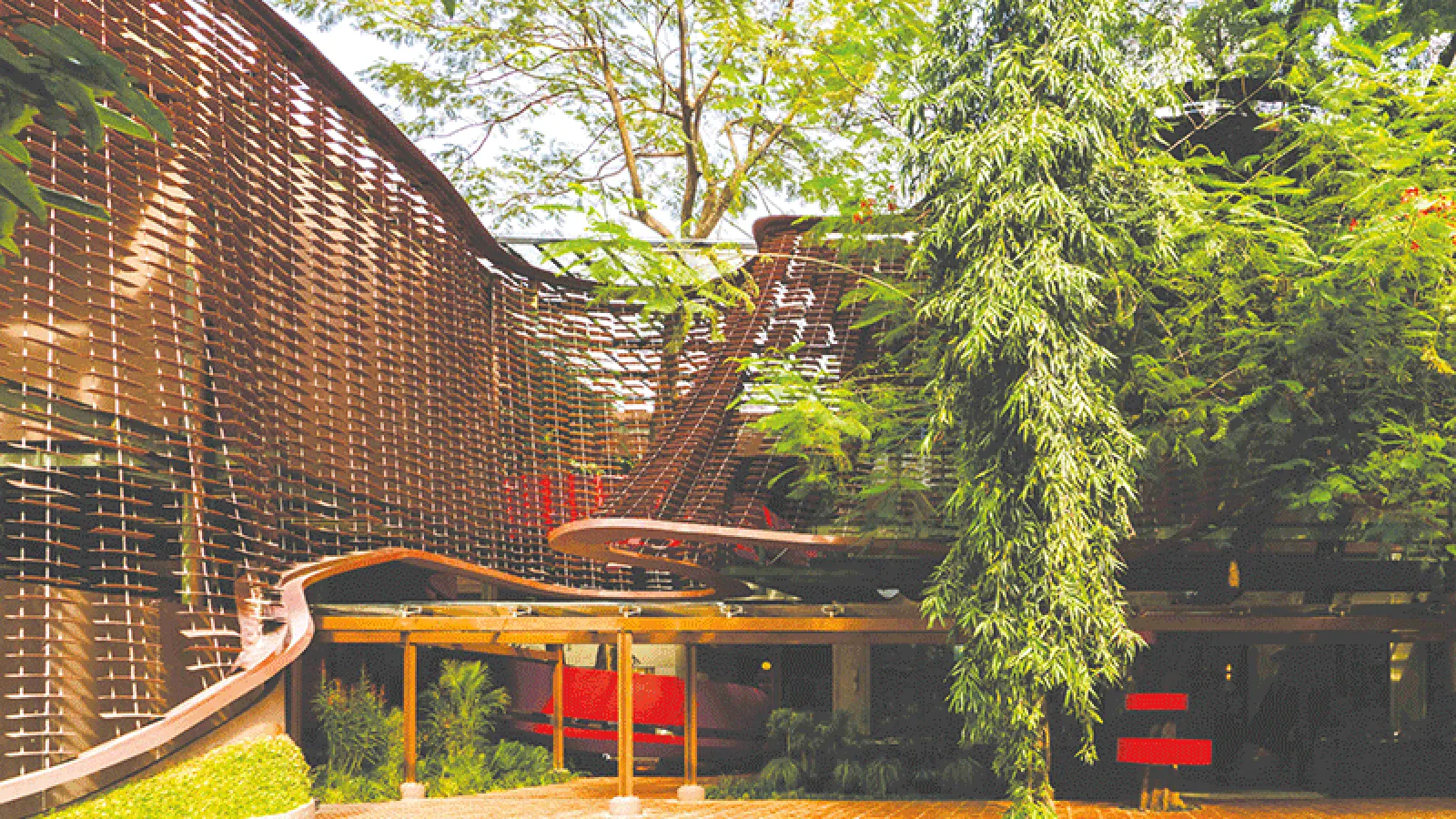

Transforming Recycled Plastic into Climate-Responsive Architecture
Lattice Creative Garden, Bali & Jakarta, Indonesia
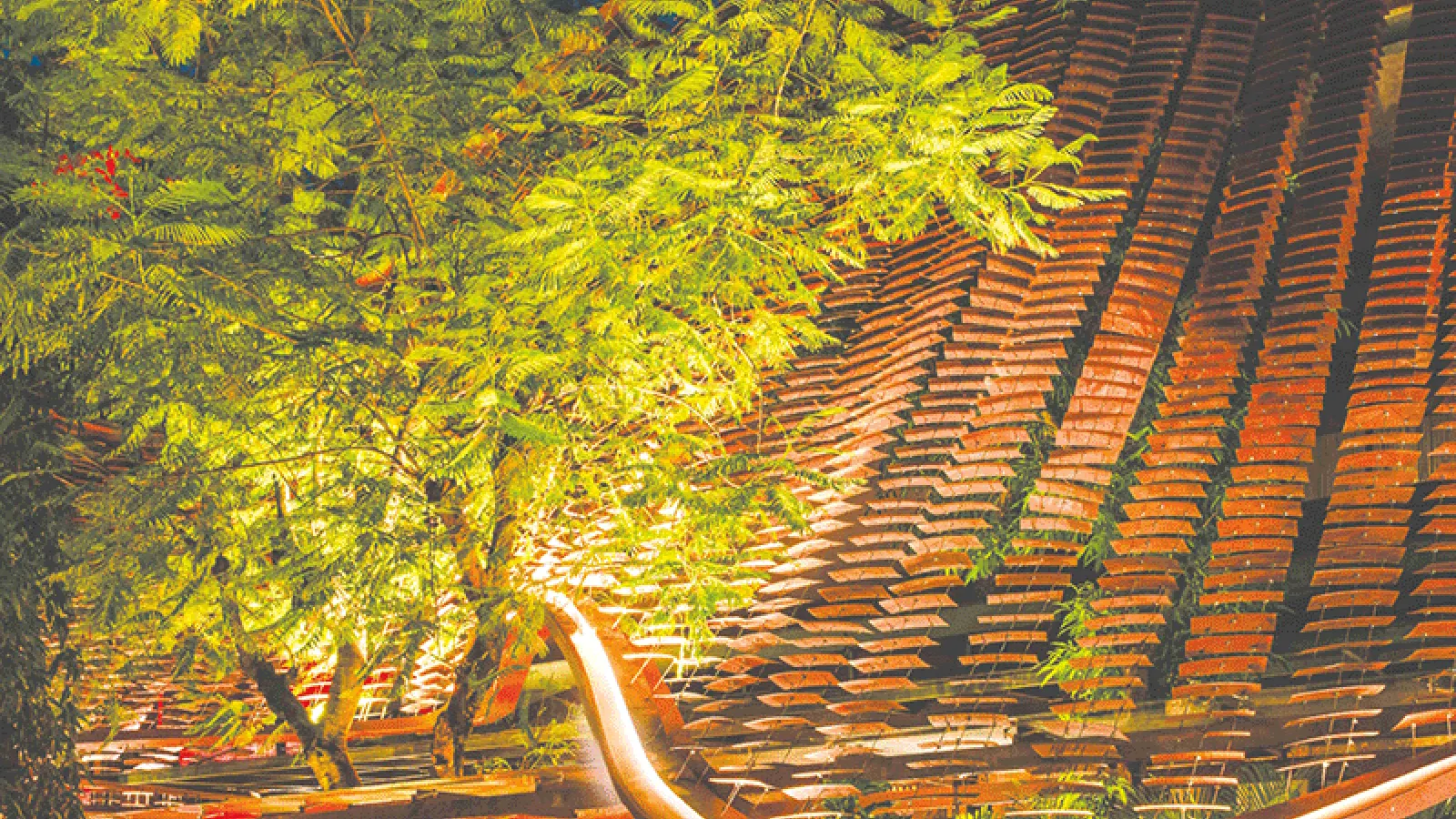
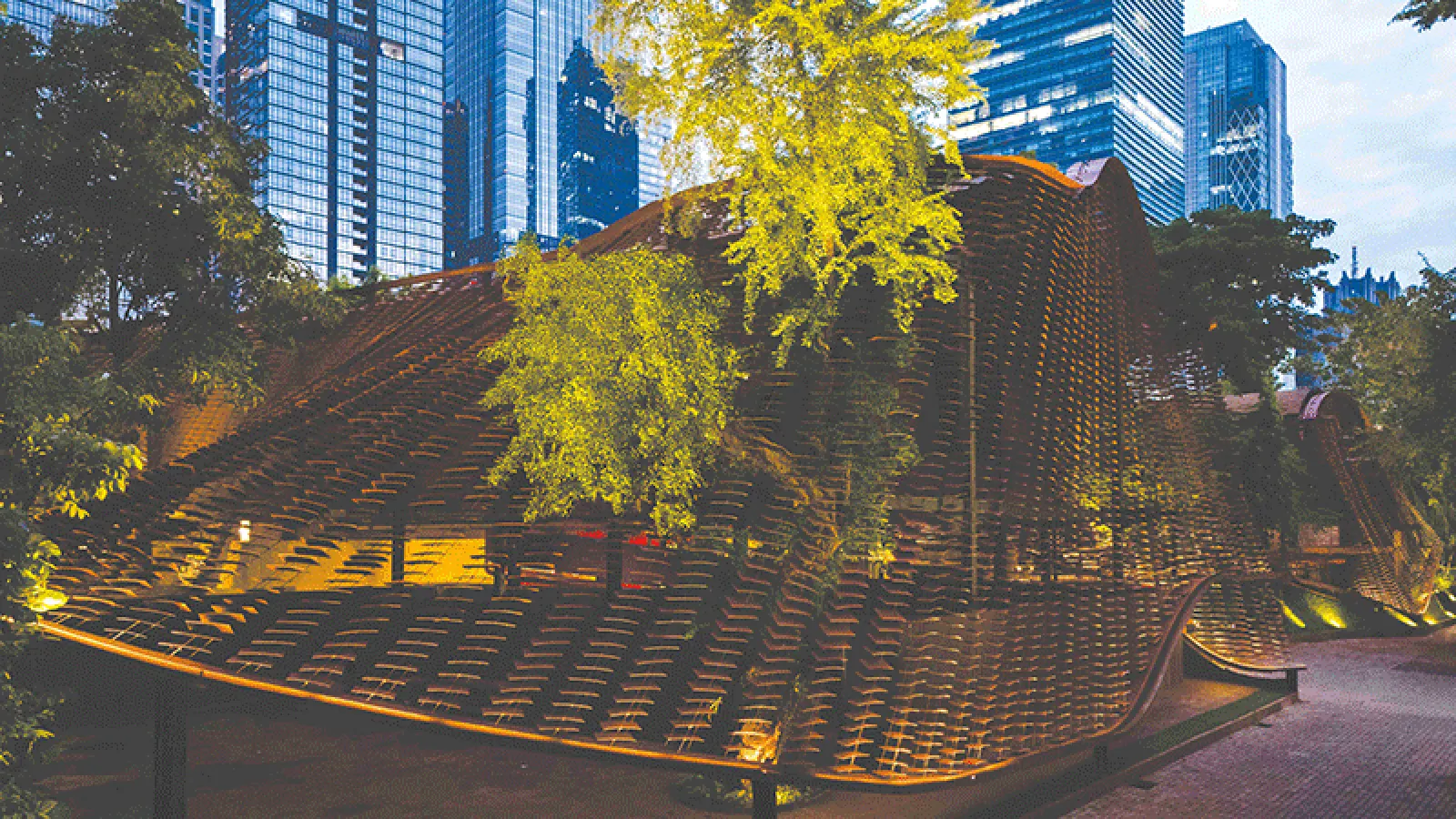
Located in Jakarta and inspired by the tropical environments of Bali, the Lattice Creative Garden reinterprets traditional Indonesian latticework using recycled plastic to create a parametric shading façade that enhances climate control and sustainability.
The project integrates architecture with existing trees, promoting passive cooling, reducing dependence on energy-intensive systems, and demonstrating how innovative waste reuse and bioclimatic design can thrive within a dense urban environment.
Reinterpreting Traditional Latticework
The lattice principle has been a crucial component of architecture in Indonesia for centuries, especially in hot and humid climates. Traditionally used to allow airflow while filtering sunlight, latticework represents a powerful example of climate-responsive design.
In the Lattice Garden project, this principle is reimagined with modern techniques. Through a concept of dual coding—function and symbolism—the lattice becomes both a high-performance shading device and a culturally meaningful architectural element.
The design introduces greater freedom and flexibility, allowing the façade to act as:
- A climate control system
- A visually dynamic screen
- A contemporary interpretation of Indonesian architectural identity
Parametric Design and Recycled Materials
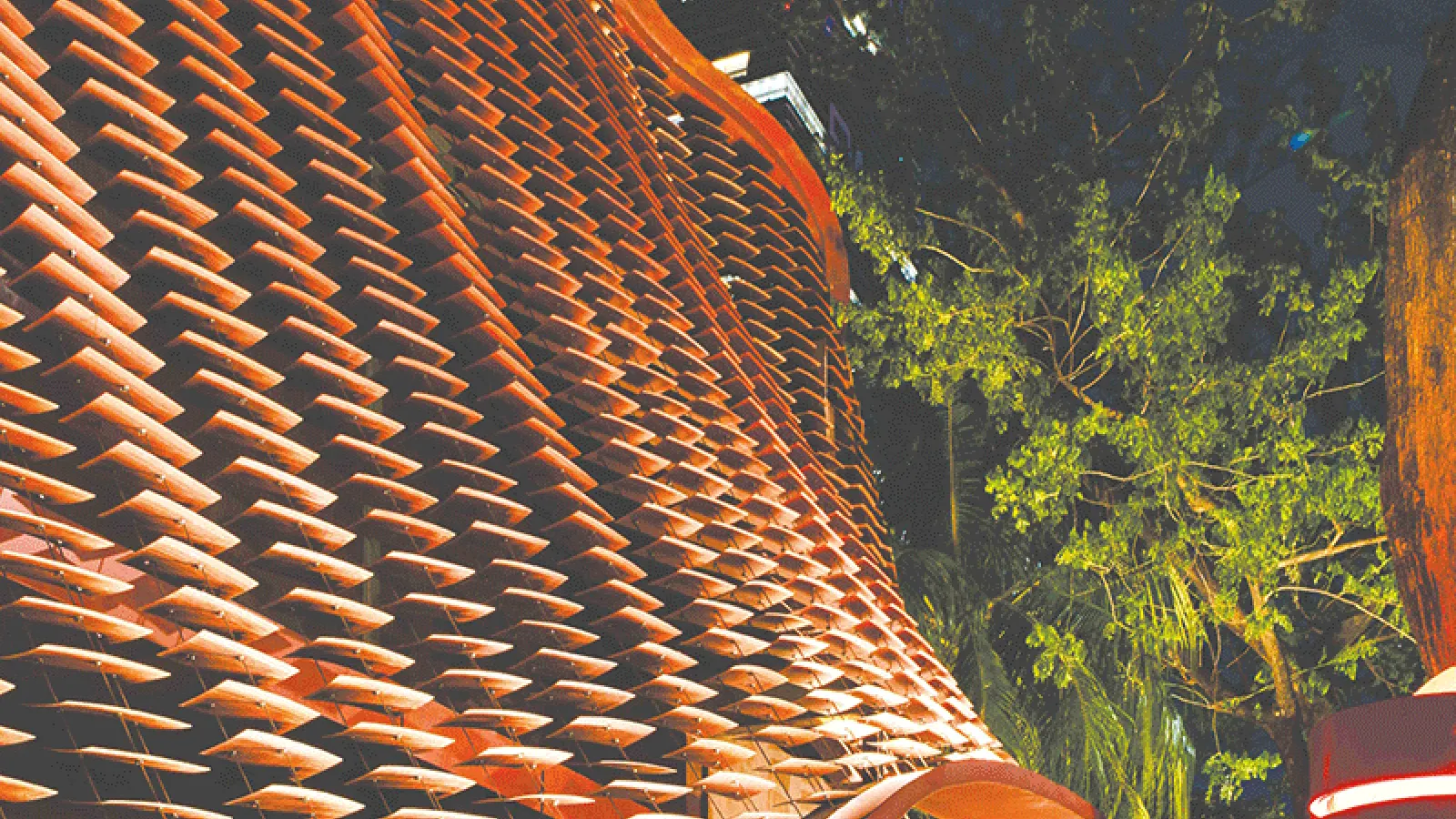
Refined using a tensioned cable geometry, recycled plastic components form an undulating lattice skin that appears to dance among the surrounding trees.
The parametric façade is computationally derived to provide calculated solar protection, ensuring that the building receives optimal shade while maintaining airflow and visual transparency.
The materials used for the structure highlight an innovative approach to waste reuse:
- 4,800 kg of recycled plastic sourced from weekly waste in Jakarta’s SCBD (Sudirman Central Business District) area
- Transformed into 16,800 functional architectural lattice plates
By integrating recycled materials into a prominent urban site, the project also raises awareness about Indonesia’s plastic waste crisis. Each year, the country produces around 7 million tons of untreated plastic waste, making projects like this an important public reminder of the need for sustainable material cycles.
Architecture Designed Around Nature
Instead of forcing the landscape to adapt to the architecture, the design process was reverse-engineered around the existing ecology of the site.
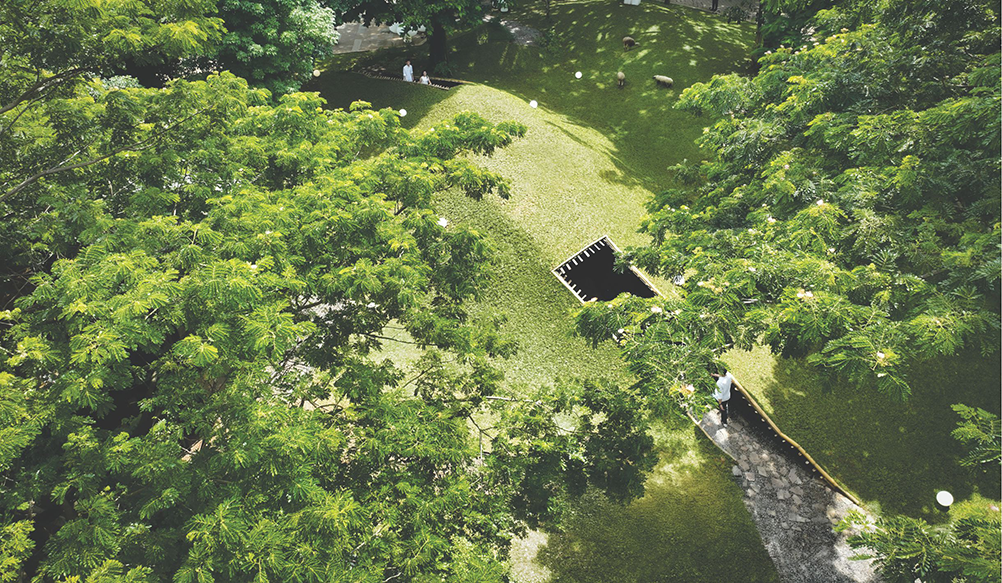
The project maintains a minimum of 40% ground coverage, allowing the architecture to weave between 20-meter-tall existing trees.
- The massing strategy choreographs:
- Saleable commercial areas
- Public activity spaces
- Landscaped zones
all while preserving the natural tree canopy.
This approach creates a fluid dialogue between architecture and nature, where porous terraces and open spaces allow trees to thrive alongside the built structure.
Transitional Terraces and Urban Integration
The building’s massing is organized through a sequence of transitional outdoor terraces that connect the parametric façade with the natural landscape.
- These terraces serve multiple purposes:
- Supporting arboreal growth
- Enhancing airflow and shading
- Creating usable commercial spaces
The result is a design that maximizes leasable efficiency while preserving ecological balance.
Passive Cooling and Energy Reduction
Lattice Garden also serves as an experimental prototype exploring tenant behavior and energy stewardship in dense urban developments.
Instead of relying heavily on mechanical systems, the building employs passive strategies such as:
- Extreme shading through the lattice envelope
- Decoupled façades creating breezeways
- Thermal chimneys that encourage natural air movement
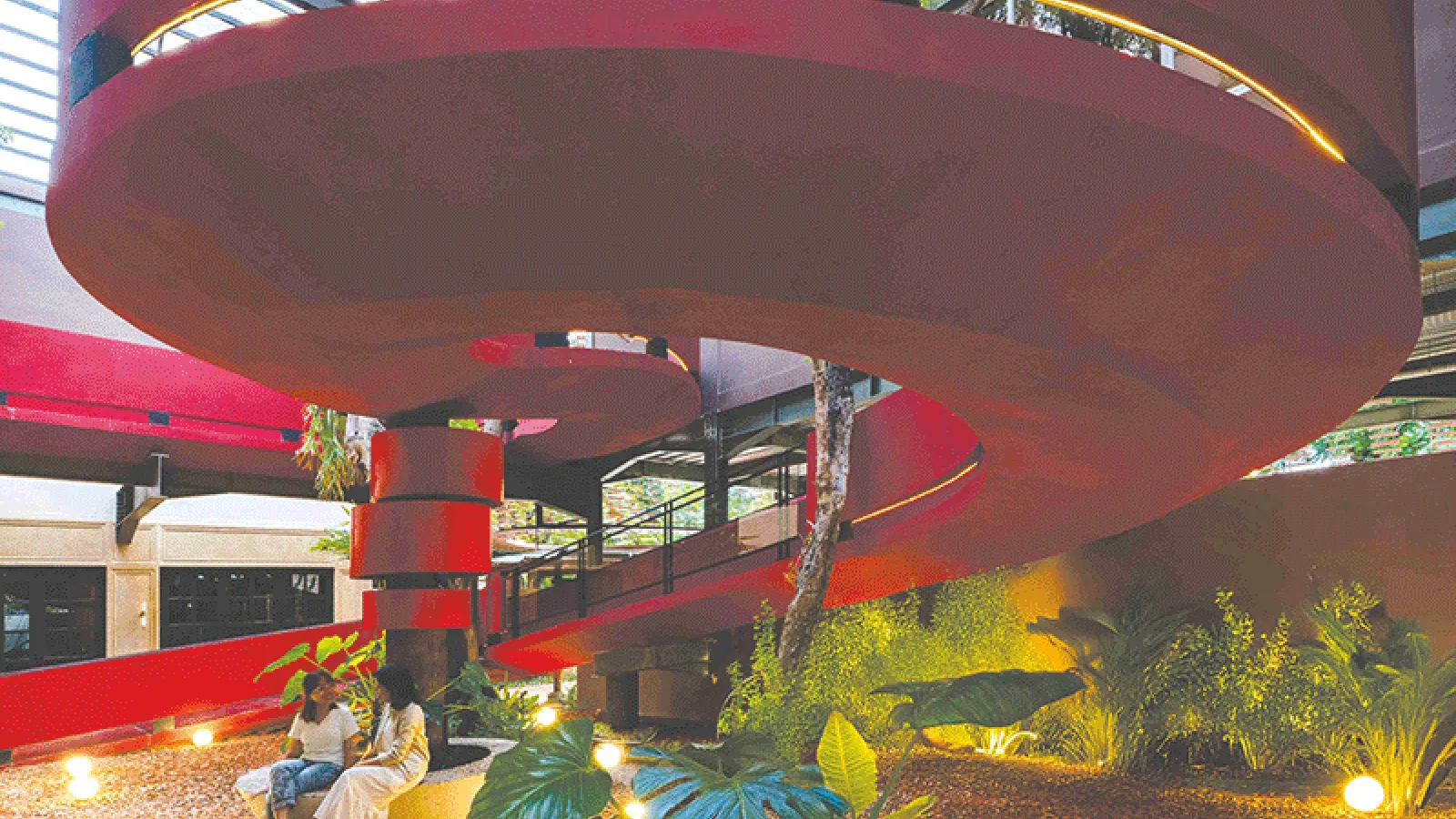
- A meandering garden ramp replacing conventional elevators
This unconventional vertical circulation system reduces the need for mechanical lifts and encourages users to move through landscaped pathways.
Together, these strategies significantly reduce dependence on air-conditioning and elevators, demonstrating that sustainable design can coexist with commercial viability.
A Model for Sustainable Urban Development
In rapidly developing economies where land values and commercial pressure often dominate design decisions, Lattice Garden proposes an alternative vision.
The project demonstrates that environmental responsiveness does not have to be sacrificed for economic growth.
By combining recycled materials, parametric technology, traditional climate wisdom, and ecological sensitivity, the project stands as a powerful example of how architecture can address both environmental challenges and urban development needs simultaneously.

-preview.webp)
-preview.webp)
-preview.webp)
-preview.webp)
-preview.webp)